















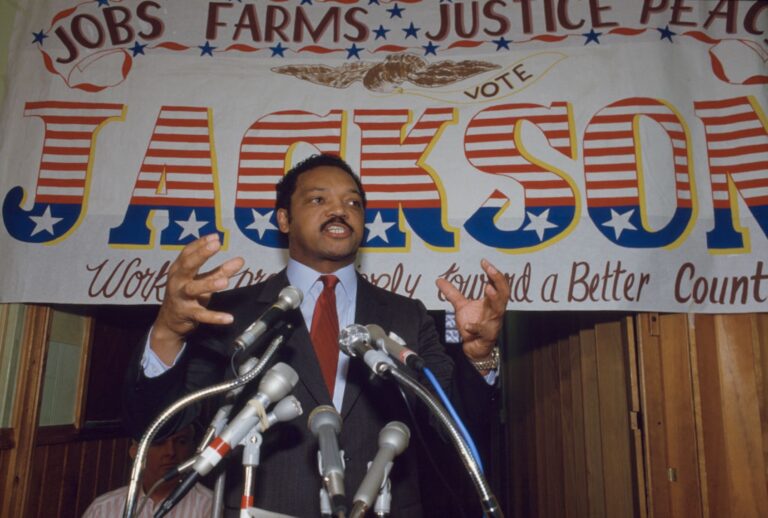
On Feb. 17, civil rights icon, activist and politician the Rev. Jesse L. Jackson died at the age of 84. The black community lost a pillar, and he will be missed.
While I was growing up, Jackson’s contributions were never taught in any of my history classes, not even during a Black History Month unit. I had to learn about him on my own, through research and stories from my family members who told me about how Jackson and others kept the Civil Rights Movement alive after the assassination of the Rev. Dr. Martin Luther King Jr. in 1968.
I remember first hearing Jackson recite the poem, written by Rev. William Holmes Borders Sr., “I am…Somebody.” Jackson led a group of children in repeating the mantra on an episode of “Sesame Street” from 1971. Me and my grandmother used to watch old episodes when I visited her.
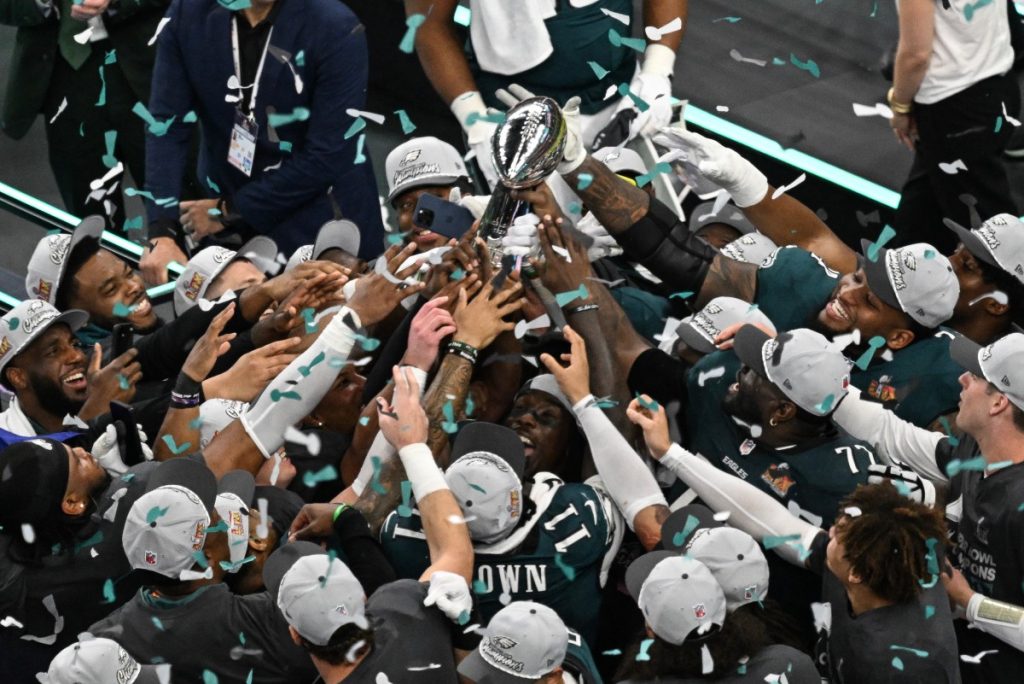
Most recently, the poem was used in a 2025 Super Bowl commercial made by the NFL about its mentoring program. This commercial prompted a new generation of kids to do their research about the poem and learn more about the man behind the mic.
Not only was Jackson a leader in the Civil Rights Movement, but he also ran for President in 1984 and 1988. Though he lost in the Democratic Primary both years, he said things that other politicians didn’t say at the time, including speaking up about the rapidly spreading disease of AIDS. Jackson did this before even former Pres. Ronald Reagan.
Jackson constantly preached about unity in America and the beauty of our differences, that our differences are what make us a great country.

During his 1988 Democratic National Convention speech, Jackson said “America is not a blanket woven from one thread, one color, one cloth…” He then talked about how growing up, his grandmother could not afford a blanket, so she took old and different pieces of cloth and sewed them into a quilt, so they wouldn’t freeze.
“We must build such a quilt…,” Jackson said. “When we form a great quilt of unity and common ground, we’ll have the power to bring about health care and housing and jobs and education and hope to our nation.”
With his passing, I believe more and more people will learn about Jackson and the impactful things that he accomplished in his life.
However, it is a shame that many black leaders like Jackson don’t get recognized until after their deaths. We have seen this many times before with unsung activists like Bayard Rustin, Ella Baker, Claudette Colvin and Hosea Williams.
Jackson taught generations that no matter their race, they were, in fact, somebody. That they deserved to be in the room where important conversations took place. He taught generations that we all may look, act and think differently, but we are all a part of the same “great quilt” that is the United States of America.
In America right now, there is a lot of talk about how we are different – in ethnicity, political affiliation, gender identity, immigration status and on and on. But it is those differences that make us a unique country, a country that has the potential to live up to Jackson’s hopes for it.
Connecticut Gov. Ned Lamont has directed U.S. and state flags lowered to half-staff from sunrise to sunset on March 7, in Jackson’s honor. The tribute will coincide with a homegoing service for him that day at the Rainbow PUSH Coalition Community House in Chicago.