


















A team from CT State Manchester is working on a drone it hopes will help it retain its title as Overall Event Winner of the 2024-2025 Community College Quadcopter Challenge. Now known as the Community College Drone Challenge, the event, sponsored by the NASA Connecticut Space Grant Consortium, is scheduled for later this month at the University of Hartford.
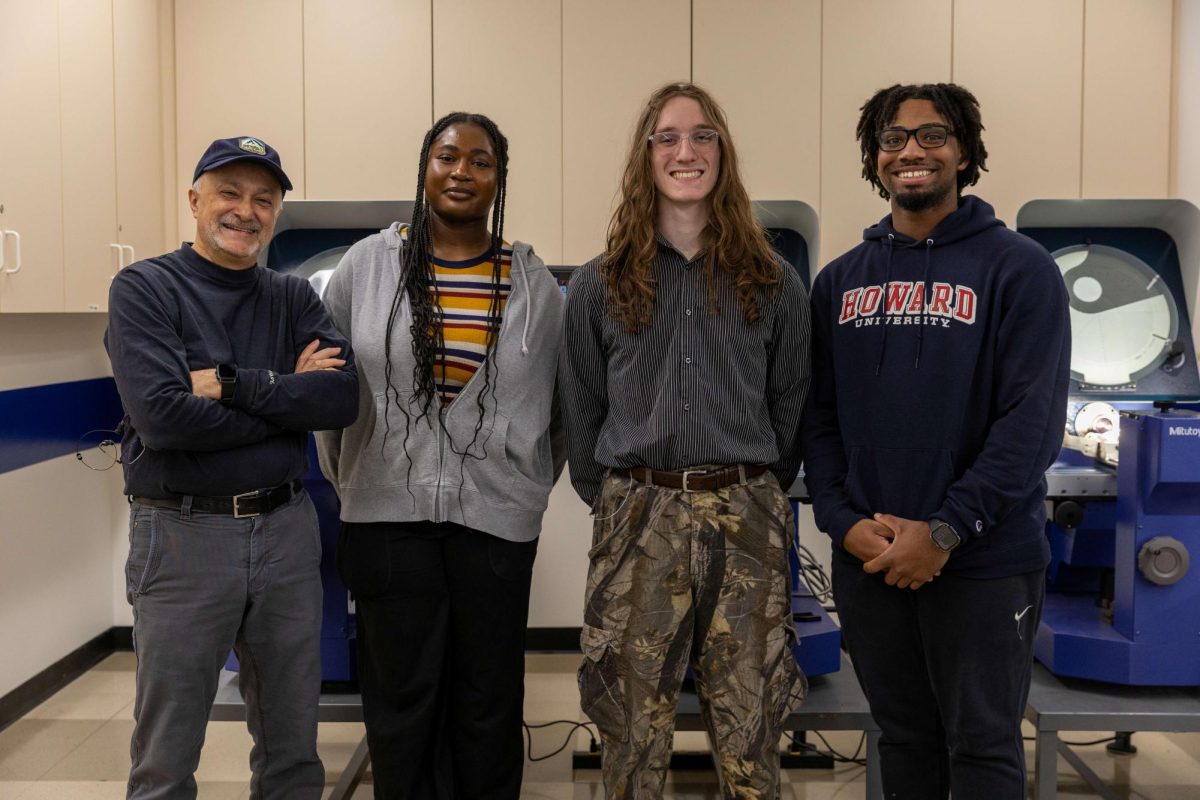
The Manchester team includes Engineering Science students Bradley Carlson and Elhame Adam and Computer Science student Marcelus Brown, who attends CT State Capital. The team is led by Mehrdad Faezi, who teaches manufacturing at Manchester. Together they are known as the Manchester Sky Knights.
That is the name that the 2025 team won with.
“Our Manchester Sky Knights team won several key categories, including Best Poster & Presentation, Best Multi-Pilot Flight and Best Photography/Mapping, earning us first place overall among the seven participating campuses,” said Faezi in 2025.
For 2026 team members like Carlson, the goal is simple.
“Get first place and crush the competition,” he said.
To win, the team’s drone needs to meet a number of criteria, including autonomous flight, sample collection and photography and mapping as well as additional materials such as a poster and presentation. NASA set the standard parts for the size of the drone and gave each team a $1,000 budget to procure parts, tools and backups.
The campus supports the team by making facilities such as 3D printers, workspaces in classrooms and computers with 3D modeling software available to make its parts.
Faezi has been assembling the team since the fall semester, he said. Each member has strengths they bring to the team. Carlson is the team leader guiding the others towards the goal of completing the drone. Brown said he heard about the challenge from a family friend. He takes photos as evidence of the work and assists with the programming of flight software for the drone.
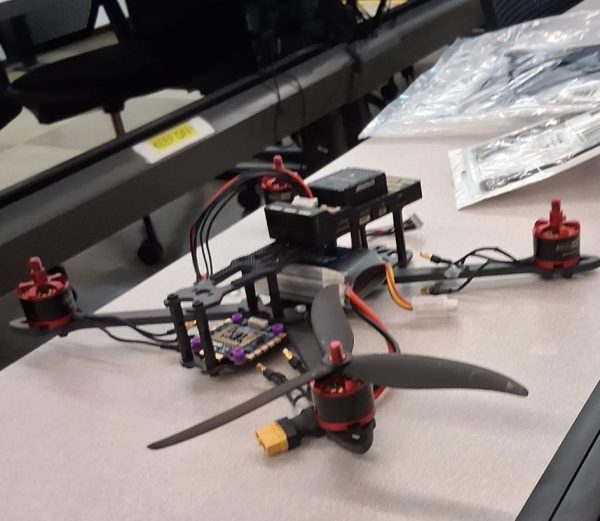
Adam has previous experience assembling underwater drones and is the researcher and assembler of the team. She has been working on integrating the hardware with the software, a problem the last campus team faced in 2025.
Other issues include designing parts for the drone frame as there is no online diagram or specifications of measurements to fall back on, and cable management. With a small drone, there isn’t much space for parts, so there’s a danger that the propellers will get caught in the wires.
Despite the challenges, Faezi is confident the team will hold its own against the competition.
“I think they are like the X-Men,” he said of the team, adding that each one has their own strengths and weakness, but are solid as a whole.
That solidity will be tested April 17 at the University of Hartford.